Adoption isn't a technology problem — it's a collaboration problem. So instead of another rollout, I put your business and your tech people in one room: two teams, two use cases, two days — and two tested prototypes, ready to go into development.
The licenses are bought. The training sessions happened. The policy is written, the champions are named, the dashboard says adoption is at 60%.
Then you look at how people actually work — and it's the same as last year. The rollout happened. The workday didn't notice.
A handful of enthusiasts use AI for everything. Everyone else opened it twice, didn't know what to ask, and went back to what they know.
The launch was a success. The announcement was made, the training delivered — and the Monday after looks exactly like the Monday before.
"We've spent more on AI this year than on any other initiative. If the board asked me today what it changed, I'd be pointing at a login dashboard."
Your people aren't resistant. Nobody ever sat with them and turned their actual work into something AI could take off their desk. You've been looking in the rollout — it was waiting in the room.
I don't run awareness workshops. This is concentrated collaboration between your business and your tech people — two mixed teams, each with its own use case, its own work, its own data. In two days, each team builds something that runs.
Defined upfront in an alignment with CEO, CIO and business leads: two real problems, high friction, low risk. The business owns them — no wish lists, no innovation theatre.
In each team, the business walks the tech side through its use case in detail. Both sides brainstorm the solution together — then the tech side starts building immediately, with AI.
The business tests each prototype on real work and gives feedback; the tech side iterates on the spot. After two days: two tested prototypes that solve real problems — ready to go into development.
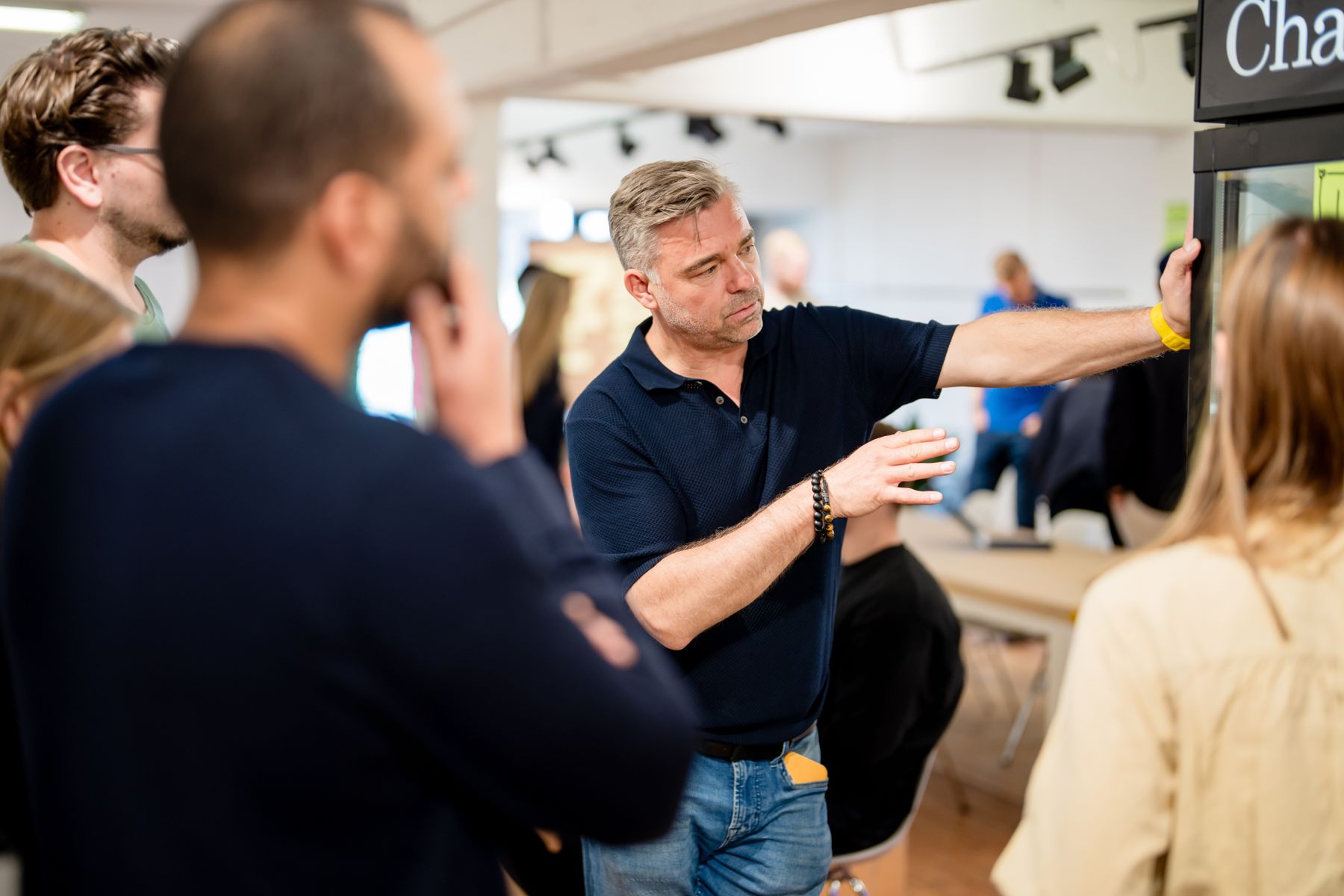
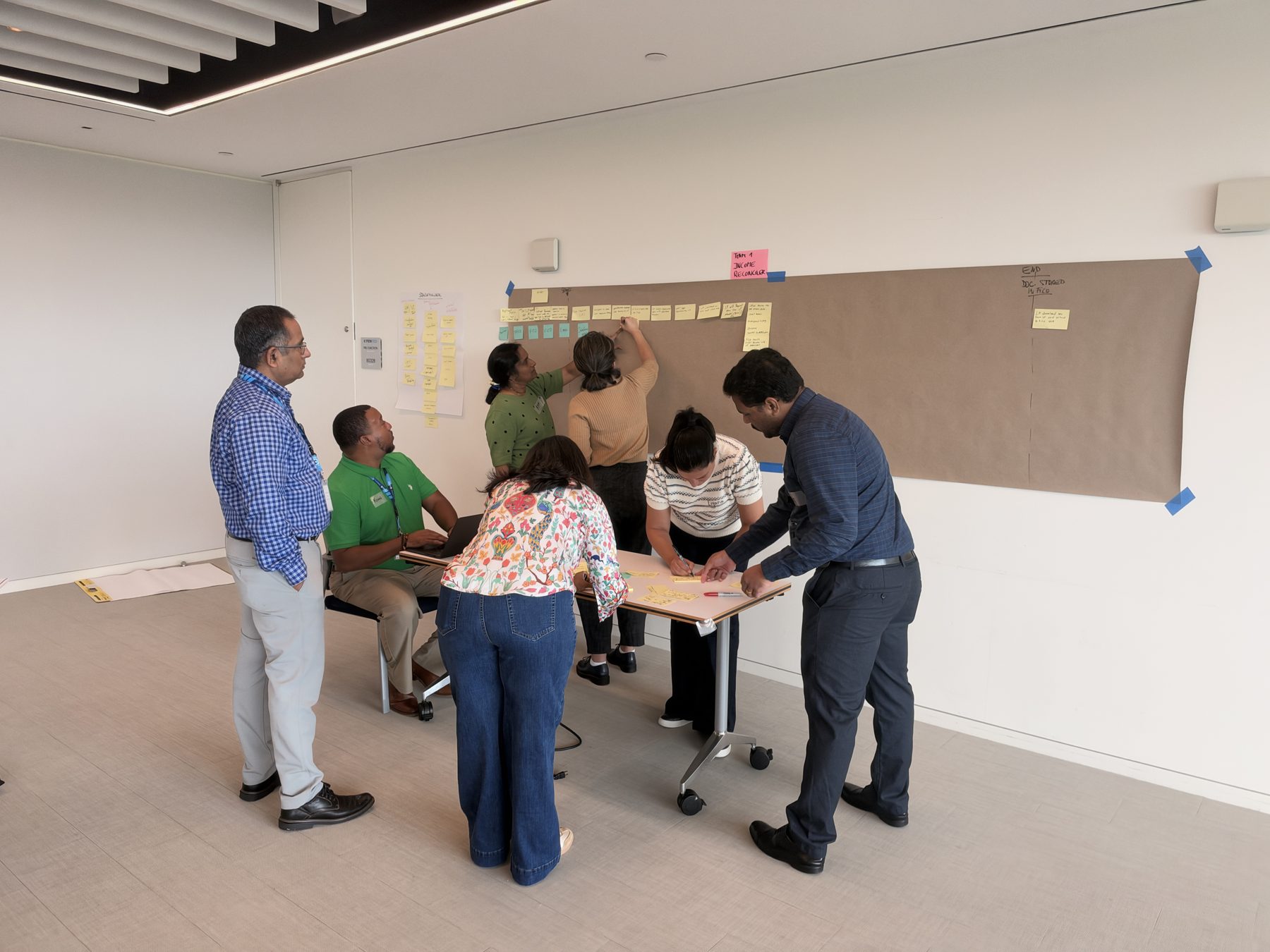
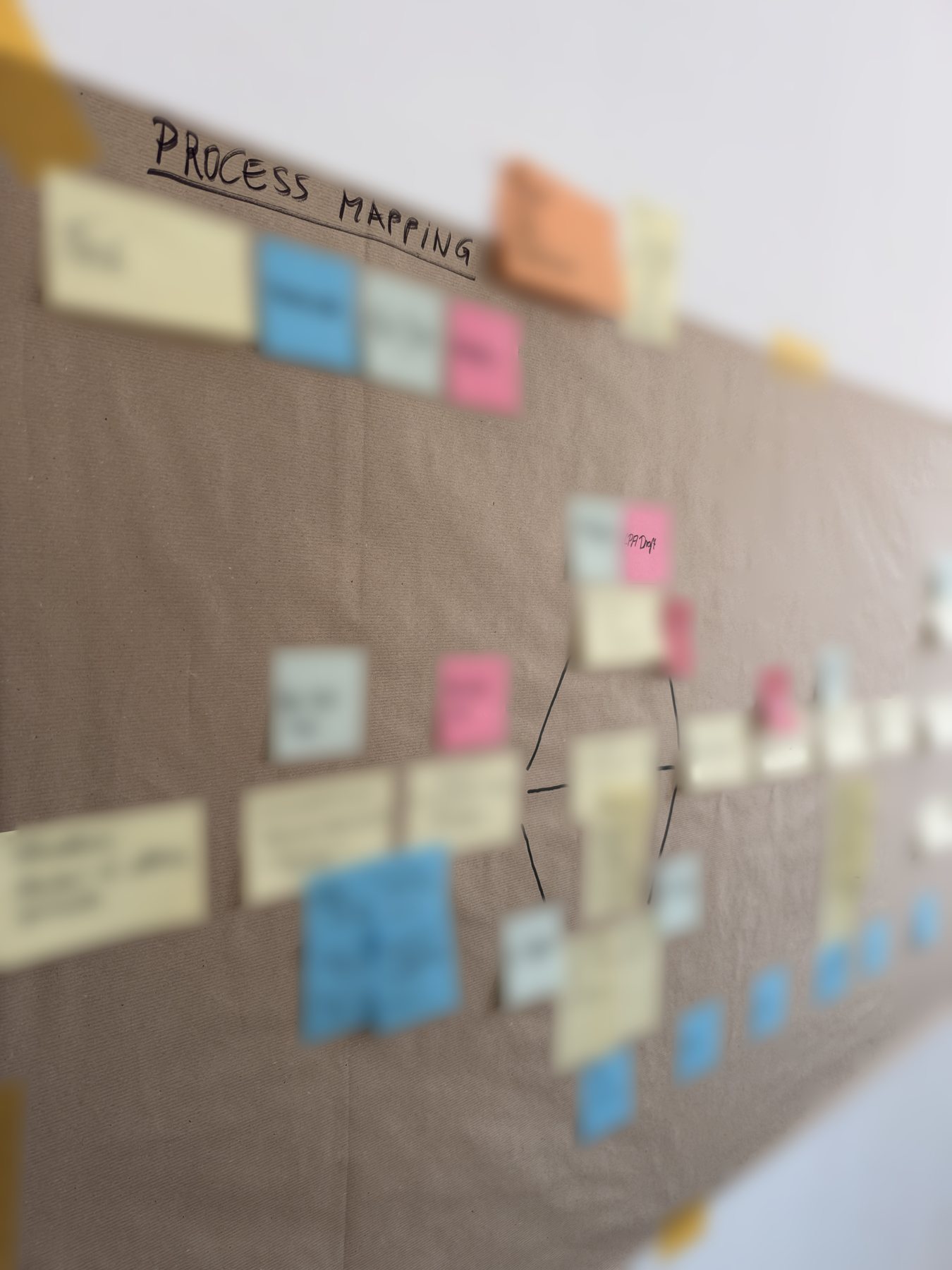
Real rooms, real sprints — business and IT, one wall, one process.
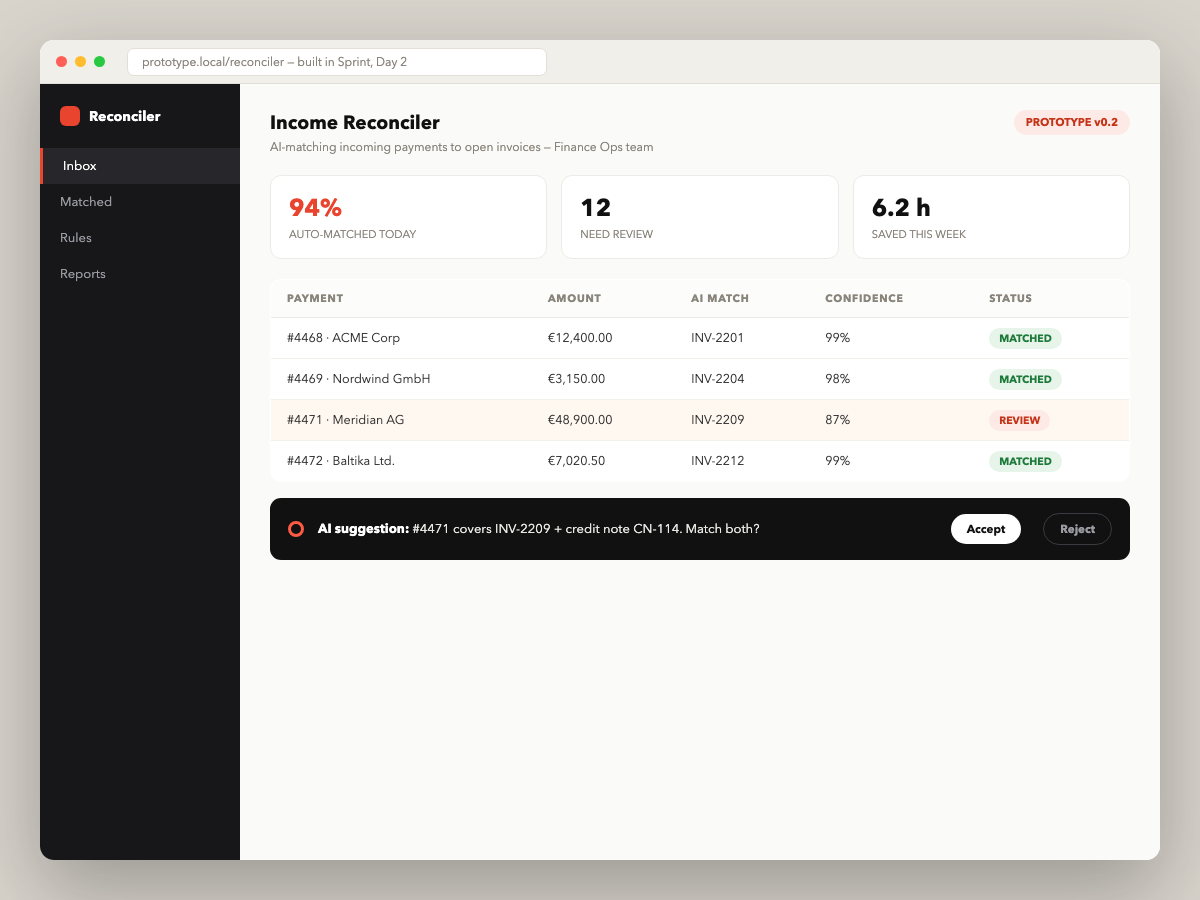
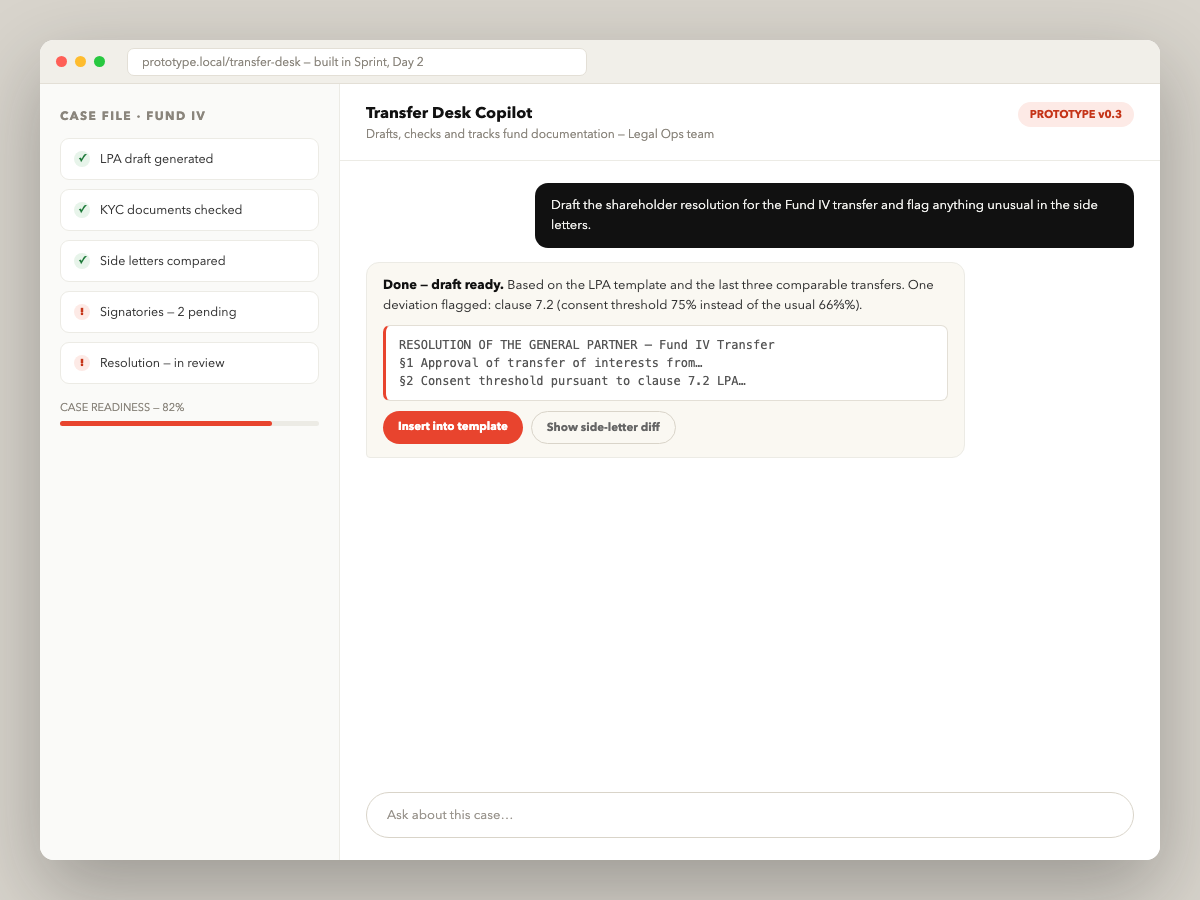
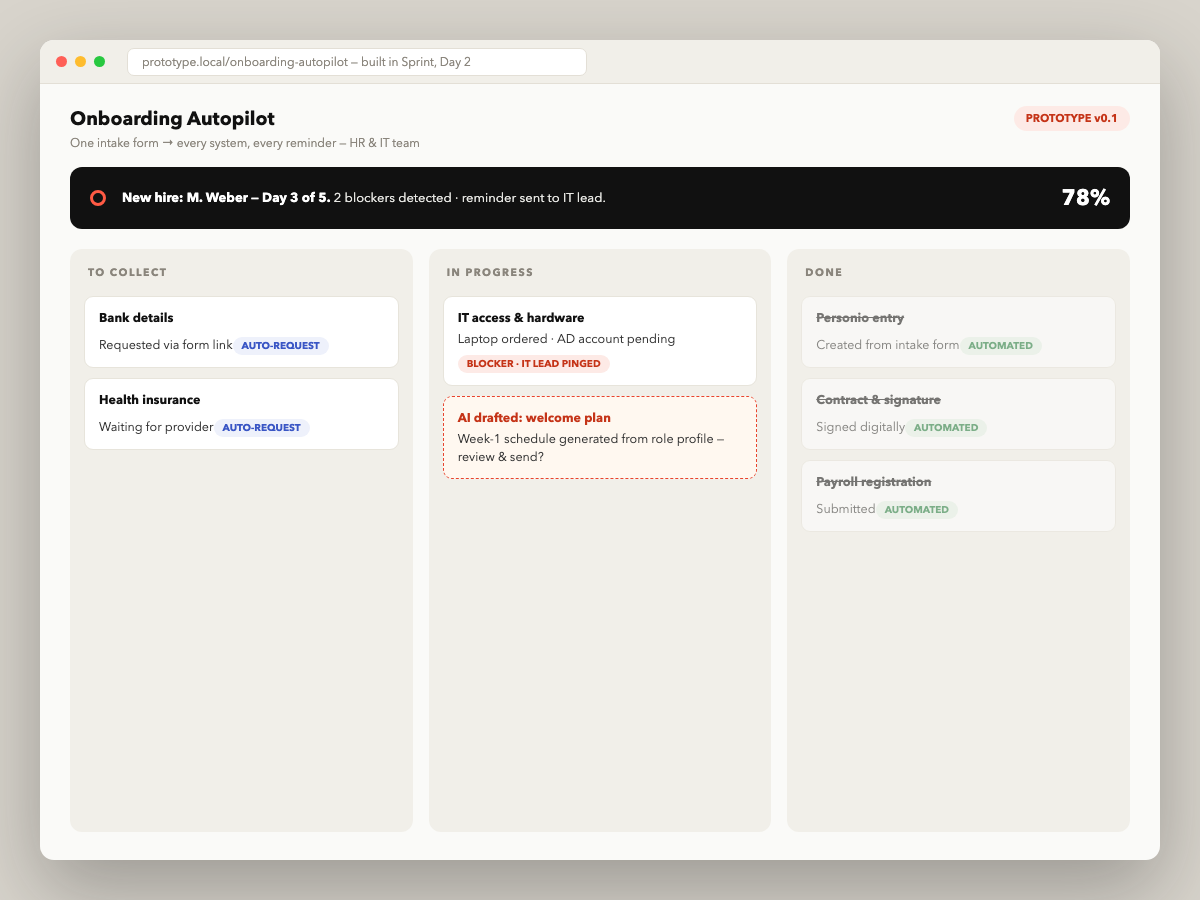
And what leaves the room: vibe-coded prototypes — built with AI in two days, tested by the business.
That's the X in impact-X.ai — cross: across functions, across silos, across the gap between IT and the business.
Adoption doesn't spread through mandates. It spreads when two teams prove it works — and the others want in.

You're not buying consulting hours. You're buying a result with a date on it.
For: your first proof that AI changes real work.
Book a callFor: when the prototypes should become daily tools.
Book a callFor: when the first two teams worked and you want the rest to follow.
Book a callAll packages are led personally by Steffen Goertz.
Built by the people who use them — so they keep using them, and keep making them better.
Two teams now know how to turn real work into use cases — and how to build together instead of briefing each other.
No adoption dashboard — two working, tested prototypes and a pipeline of teams that want to be next.
For over 20 years I've worked with high-performing teams on complex problems — from Deutsche Bank and Lufthansa to Sony, Nvidia and Louis Vuitton. I'm a certified Design Thinking Coach of the HPI d-school Potsdam / Stanford and a member of its teaching team.
My background is law — which is probably why I'm less interested in what AI could theoretically do, and more in what survives contact with how a company actually operates.
And when I'm not running sprints, you'll find me on the waters of the Spreewald as a certified master fisherman. Both jobs taught me the same thing: read the conditions, cast the right net, and move when the moment is right.
In a free 30-minute call we'll pick the two teams and the two use cases — no sales pitch, just your challenge. Another quarter of licenses nobody uses, or two teams that prove it works: that's the trade.
The Monday-After Checklist: five questions that show whether your AI adoption is real — a free two-minute self-assessment.